By Vanessa Gaudiano, nutritionist and phytotherapist
Fatigue, low mood, lack of energy, heavy legs, difficulty losing weight, aching joints and fingers. If this sounds like you, it’s worth looking at inflammation in the body, and diet can help. In this post, I share a simple recipe from my practice: a water made with flaxseed and chia, the two seeds richest in plant-based omega-3.
Why Omega-3?
Omega-3 has a well-studied anti-inflammatory action. Seeds provide alpha-linolenic acid (ALA), which the body converts into EPA and DHA, forms linked to nervous system health and inflammation control. This conversion is limited, so seeds are an ally in your routine, not a replacement for professional guidance.
Recipe: Flaxseed and Chia Water
Ingredients
- 300 ml of warm water (not too hot)
- 1 tablespoon of ground flaxseed
- 1 tablespoon of chia seeds
- Optional: a little cocoa, in the morning only, since it’s energizing and may interfere with sleep
Instructions
- Warm the water until lukewarm.
- Add it to a blender with the ground flaxseed and chia.
- Blend and drink right away.
I prefer it in the morning, because my digestion works great afterward.
How to Grind Flaxseed
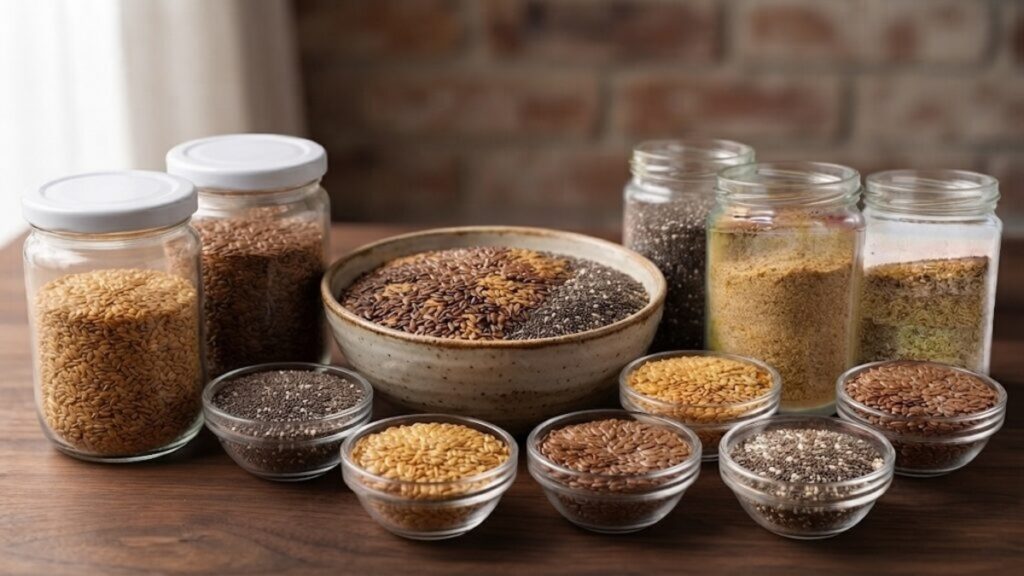
- Buy whole flaxseed (brown or golden, whichever is more accessible). For water, I prefer golden, which is milder.
- I do not buy flaxseed meal: I grind it at home.
- Grind about 250 g at a time. If your blender is weak, start with 100 g and add more.
- A blender gives a crumbly, meal-like texture. A food processor needs care, since it can turn into a paste.
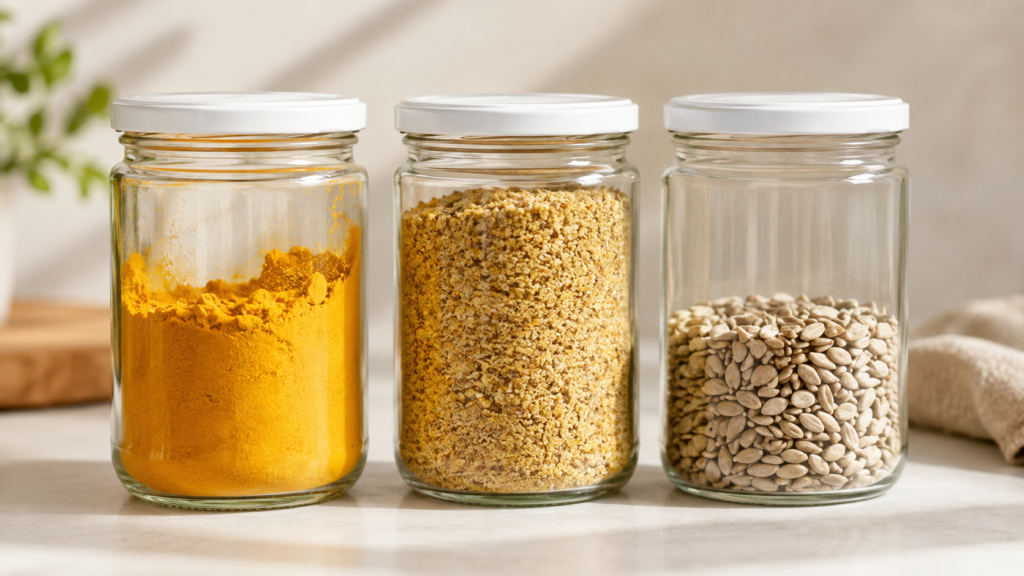
- You don’t need to grind it daily. Seeds don’t oxidize the way cut fruit browns, so you can use the same batch for the month. Store it in a tightly closed jar, away from heat and light, or in the fridge if you prefer.
- Does it have to be ground? Yes. Phytoestrogens and other nutrients are in the hull, and whole seeds often pass through the gut unabsorbed.
What This Recipe May Offer
- Cardiovascular health: omega-3 may contribute to managing cholesterol (including LDL, which builds up on artery walls in excess) and blood pressure
- Anti-inflammatory action: may help in conditions tied to inflammation, such as joint pain, arthritis, osteoarthritis, and fibromyalgia
- Menopause stage: after 40 to 45, the drop in estrogen often brings more inflammation and wear. Flaxseed is rich in phytoestrogens, concentrated in the hull, and may support hormonal balance
- Blood sugar: fiber slows glucose absorption, helping avoid blood sugar spikes and supporting insulin balance
- Digestion: fiber helps soften stools
- Skin, nails, and hair: with better gut function and nutrient absorption, many people notice improvement over time, plus more energy and less bloating
Why Routine Matters
Until your early 30s, the body responds quickly to what you give it. From around 43 to 45, the impact of too much (or too little) food and exercise becomes clearer. Introduce seeds gradually and accompany them with plenty of water.
Important Precautions
- Drink plenty of water throughout the day, since fiber needs fluid
- If you take blood thinners, have an intestinal disease, or have a hormone-sensitive condition, consult a professional before increasing your flaxseed intake
- This recipe is support, not a substitute for medical treatment
Want to Take the Next Step?
I run periodic one-week challenges on lifestyle, phytotherapy, and healthy eating to reduce inflammation. Check the link in the video description or the pinned comment.
Have you tried flaxseed and chia water? Tell me in the comments.
I’m a nutritionist and phytotherapist, and I help women reduce inflammation during perimenopause and menopause naturally, with teas, juices, shakes, shots, and seeds in their daily routine.
This content is for informational purposes only and does not replace medical or nutritional evaluation. Changes to your diet should be supervised by healthcare professionals.