By Vanessa Gaudiano, nutritionist and phytotherapist
If you’re over 45 and experiencing menopause symptoms, certain seeds can be allies in your daily diet. They contain plant compounds similar to estrogen, called phytoestrogens, which resemble this hormone’s receptor and may help ease and balance the symptoms of declining hormones.
Does This Post Make Sense for You?
See if you recognize yourself in these signs:
- Hot flashes and more sweating than usual
- Insomnia or poor sleep
- Fatigue and constant tiredness
- Fatty liver, insulin resistance, or type 2 diabetes
- Being above your ideal weight or having localized abdominal fat
- Hair loss and brittle nails over the past 2 years
- Being over 45
These are classic symptoms of perimenopause and menopause. If you’re in your 40s, it may also make sense for you: I’ve been using seeds since I was 30.
How Do I Know If I’m Inflamed?
A very common question. Some typical signs of inflammation:
- Bloated abdomen or a “high” belly. This isn’t always “a family thing”: it’s usually tied to diet.
- Fatigue. Ordinary tiredness goes away with rest; fatigue doesn’t, even after you’ve rested.
- Dry skin, hair loss, and brittle nails
- Irritability, anxiety, and mood swings, which often come along with pain and constant tiredness
The 5 Seeds
1. Flaxseed
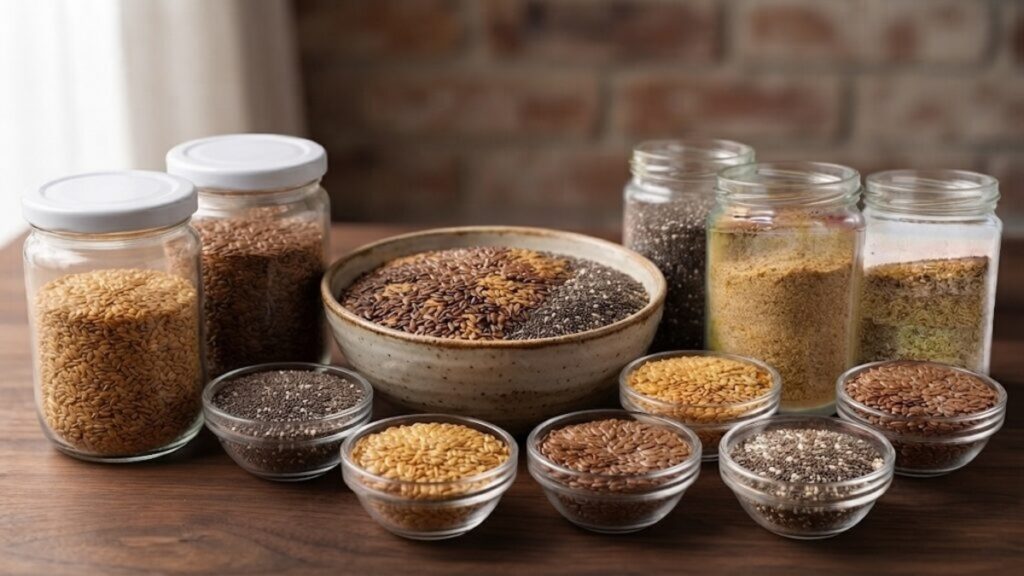
It’s the seed with the most phytoestrogens (lignans), concentrated mainly in the hull, so it’s worth buying whole seeds and grinding them at home, taking care not to strain your blender. It’s also rich in magnesium, calcium, and omega-3. Because of this, it may help with hair loss, irritability, anxiety, and mood, which are common symptoms when hormones decline. Use it in moderate amounts.
2. Chia
Excellent in shakes. It forms a gel that promotes fullness and helps protect the stomach from acidity, which may relieve heartburn and gastritis. It also helps soften stools (a healthy gut is important for hormonal balance) and is rich in omega-3. Tip: if you’re inflamed, avoid mixing it into yogurt, since dairy can be inflammatory for some people.
3. Sesame
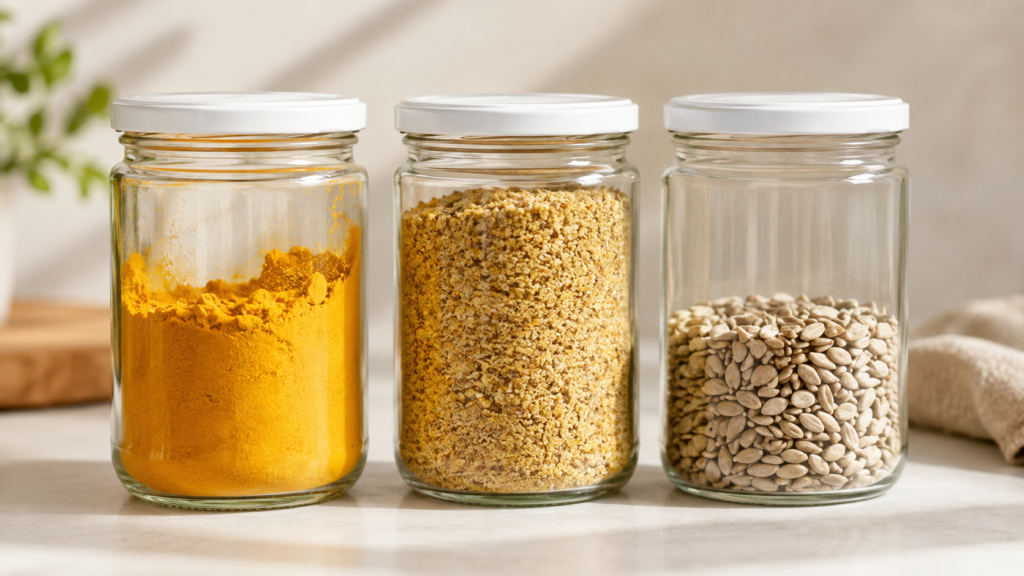
One of the most abundant natural sources of calcium. It’s great for anyone who wants to strengthen bones, joints, and cartilage, and it also provides phytoestrogens and may help with energy. Golden sesame is milder, and the darker the seed, the more protein it has. Use it in salads and everyday meals.
4. Pumpkin Seeds
Rich in magnesium, calcium, and fiber, plus tryptophan, an amino acid that helps form serotonin, the neurotransmitter linked to mood and well-being.
5. Sunflower Seeds
They also contain plenty of tryptophan, plus zinc, magnesium, and vitamin E, nutrients that are important for skin, nails, and hair. Pumpkin and sunflower seeds are similarly nutritious, and you don’t need to eat both together.
How to Use Them
- Amount: one tablespoon a day of 2 to 3 of these seeds (about 3 tablespoons in total)
- Ways to eat them: in shakes, over fruit, mixed into mashed banana, or as flour
- Timing: seeds higher in fat and calories are best avoided at night, since excess may contribute to weight gain
- Water: drink plenty of water throughout the day (not at the same time as the seeds). Without proper hydration, your gut may become unbalanced and hunger increases
- Duration: hormonal effects usually show up after about 16 weeks (4 months) of consistent use. In the first few days, you may already notice improvements in digestion, energy, and mood
An Important Reminder
Nothing replaces a doctor’s visit and lab tests. But before moving on to hormone replacement therapy, it’s worth changing your diet and seeing how your body responds, always with professional guidance.
Want to Start With Support?
I’m running the Zero Sugar Challenge, where I’ll teach you to eliminate not only refined and demerara sugar, but also foods that turn into sugar in your body. This helps reduce appetite and inflammation, and seeds tend to work better. Planning starts on October 5 and the challenge on October 12. The link is in the video description.
Do you already use seeds in your daily routine? Tell me your favorite in the comments.
I’m a nutritionist and phytotherapist, and I help women reduce inflammation and pain, especially rheumatic pain after 45, by balancing the hormones of perimenopause and menopause naturally.
This content is for informational purposes only and does not replace the guidance of doctors and nutritionists. Changes to your diet and to the treatment of menopause symptoms should be supervised by healthcare professionals.