Have you ever heard someone say flaxseed is good for your health, but you still have questions like:
✅ Why is flaxseed good for you?
✅ How much should I use per day?
✅ What’s the best way to eat it?
✅ Should I choose golden or brown flaxseed?
✅ Do I really need to grind it?
✅ How do I store it properly?
If you are a woman over 40 and want to improve your hormones, digestion, inflammation, cholesterol, blood sugar, and even libido, this guide is for you.
My name is Nutri Vanessa Gaudiano, I’m a nutritionist and herbal medicine specialist (fitotherapist), and today I’m going to show you exactly how I recommend flaxseed in my clinic, especially for my female patients.
And yes — flaxseed can truly become one of the most powerful ingredients in your daily routine… as long as you use it the right way.
Why women 40+ should include flaxseed
After 40, women often start noticing major changes in the body, such as:
- gradual estrogen decline
- increased inflammation
- harder weight loss
- slower digestion and constipation
- worse cholesterol and glucose levels
- more frequent joint pain
- mood swings, anxiety, and poor sleep
That’s why flaxseed is so valuable: it is one of the richest natural sources of lignans, compounds that act as phytoestrogens — meaning they can help support hormonal balance naturally.
Golden vs. brown flaxseed: which one is better?
Both are excellent ✅ and provide very similar benefits.
The main difference is the taste:
- Golden flaxseed: milder flavor, easier to start with
- Brown flaxseed: stronger, more bitter taste for some people
👉 If you’re not used to flaxseed, I recommend starting with golden flaxseed.
Where should you buy flaxseed?
One important tip I always give:
📌 Choose a trusted health food store with high product turnover.
Why? Because old seeds can lose quality, develop a rancid taste, and lose part of their nutritional value.
Supermarkets can work too, but health food stores often offer better freshness.
10 reasons to eat flaxseed every day
Now let’s get into the part you’re here for — the benefits I explain to my patients in a simple, practical way.
1) Improves digestion and relieves constipation
Flaxseed is rich in fiber.
If you struggle with:
- constipation
- going days without bowel movements
- abdominal discomfort
- gas and bloating
👉 Flaxseed can help a lot.
It works like a natural intestinal “broom,” supporting a healthy gut.
2) Helps control blood sugar (pre-diabetes and type 2 diabetes)
Flaxseed supports better glucose control by reducing sugar spikes after meals.
It is especially helpful for:
- insulin resistance
- pre-diabetes
- type 2 diabetes
- sugar cravings
It increases satiety and prevents sharp blood sugar highs and lows.
3) Strong anti-inflammatory action
This is one of the most important benefits.
Flaxseed may support people dealing with:
- arthritis
- osteoarthritis
- lupus
- gout
- rheumatoid arthritis
- tendonitis and chronic pain
- lipedema
- intestinal inflammation
📌 I personally eat flaxseed every day with the purpose of reducing inflammation in my body.
4) Helps reduce bloating and supports weight loss
Because it:
- increases satiety
- improves gut function
- lowers inflammation
Flaxseed can support healthy weight loss.
✅ less hunger
✅ fewer cravings
✅ less inflammation
✅ less fluid retention / bloating
5) Improves cholesterol and triglycerides
Flaxseed can help:
- increase HDL (good cholesterol)
- reduce LDL (bad cholesterol)
- improve triglycerides
Also, triglycerides are often linked to high sugar intake — and flaxseed helps regulate glucose as well.
6) Protects the heart and supports cardiovascular health
Flaxseed contains:
✅ ALA (alpha-linolenic acid) — a type of plant-based omega-3, known for its anti-inflammatory and heart-protective properties.
It helps reduce risk factors such as:
- plaque buildup in arteries
- cardiovascular issues
- inflammation-related high blood pressure
7) Improves skin and vision (carotenoids)
Flaxseed provides compounds like:
- lutein
- zeaxanthin
These carotenoids protect:
- the eyes
- vision
- skin health
8) Supports bones and teeth (calcium, magnesium, potassium)
Flaxseed contains minerals such as:
- calcium
- magnesium
- potassium
- zinc
This supports prevention of:
- osteopenia
- osteoporosis
- bone fragility during perimenopause and menopause
9) Supports brain health and memory
Flaxseed contains:
- ALA omega-3
- vitamin E
- zinc
Which support:
- memory
- focus
- brain protection over time
10) Menopause support: phytoestrogens for hormonal balance
This is often the most important benefit for women:
📌 Flaxseed is one of the top foods rich in lignans, which have phytoestrogen-like effects.
This can support improvements in:
- hot flashes
- irritability
- low libido
- fatigue
- stubborn weight gain
- emotional instability
Do you really need to grind flaxseed? YES — and here’s why
This is the most important point:
✅ Whole flaxseed can help digestion.
❌ But for hormonal, anti-inflammatory and omega-3 benefits…
👉 You must grind it.
If you eat it whole, it often passes through the gut without being fully absorbed — and you miss most of its nutrients.
Should you buy flaxseed meal (ground flaxseed) ready-made?
I do not recommend it.
Why?
- it may already be oxidized
- it may be old
- you don’t know when it was ground
- nutritional quality decreases quickly
📌 Best option:
Buy the seeds → grind at home → store properly → use within 15 to 30 days
How much flaxseed should you take per day?
✅ 1 tablespoon per day is ideal
✅ 2 tablespoons per day if your body tolerates it well
⚠ More than that may cause:
- loose stools
- gas
- discomfort
And remember: seeds require water.
👉 If you don’t drink enough water, flaxseed may actually worsen constipation.
How to store flaxseed properly
Here’s what I do:
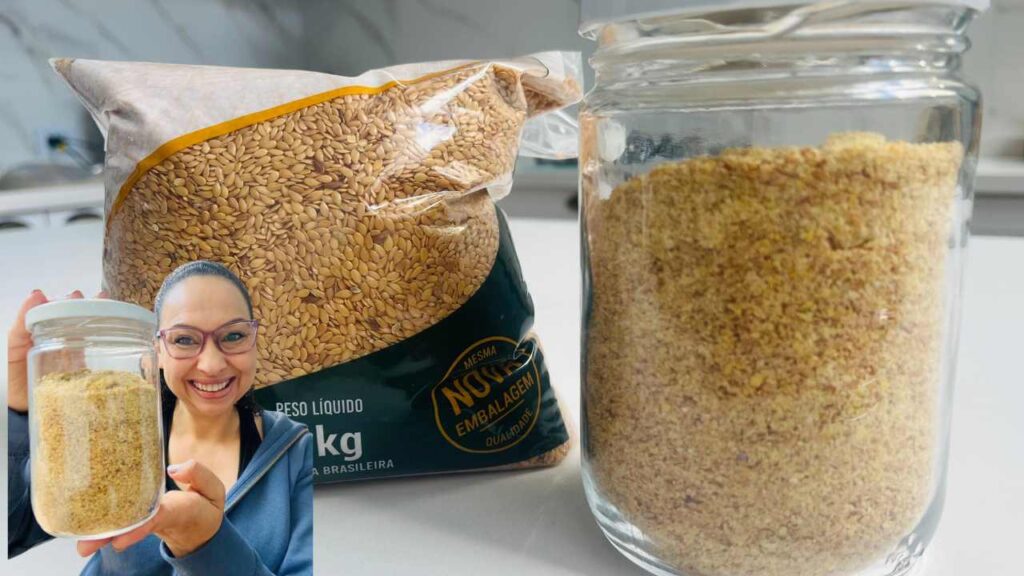
- Buy a bag (example: 500g)
- Grind half (250g) in a blender
- Store the ground flaxseed:
- in a glass jar
- tightly closed
- away from sunlight
- in a cool place
- Store the remaining whole seeds in the freezer
✅ Seeds store very well in the freezer and stay fresh longer.
📌 Ground flaxseed should be used within:
15 to 30 days maximum
Who should avoid flaxseed?
Most people can safely use it.
⚠ But people with conditions such as:
- colitis
- diverticulitis
- ulcerative colitis / inflammatory bowel conditions
Should use the ground form, and monitor tolerance.
If you notice:
- allergy-like symptoms
- excessive gas
- discomfort
- worsening digestion
✅ stop using it and get professional guidance.
Is flaxseed high in calories?
Yes, but it’s healthy calories.
In about 10g (1 tablespoon):
✅ around 50–55 calories
But it also provides:
- fiber
- magnesium
- zinc
- vitamin E
- ALA omega-3
- lignans
- strong satiety
📌 It’s not empty calories — it’s functional nutrition.
Final tip: flaxseed vs. sesame seed (don’t mix them up!)
Many people confuse flaxseed with sesame seeds.
But here’s the difference:
- sesame seeds are rounder
- flaxseed is more oval and longer
If you read until the end, comment:
✅ “I found the secret”
so I’ll know you stayed to the end 😄
Conclusion: Is flaxseed worth it?
Yes — especially if you are a woman 40+ who:
✅ wants to balance hormones
✅ wants to reduce inflammation
✅ struggles with constipation
✅ deals with joint pain / arthritis
✅ wants better glucose and cholesterol control
✅ wants easier weight loss
But remember:
📌 The secret is using ground flaxseed, consistently, with enough water.