Reduce Hot Flashes, Improve Mood, Boost Energy and Balance Hormones Naturally
If you are going through perimenopause, menopause, or even postmenopause, you have probably noticed that your body has changed — and often not in subtle ways. Hot flashes, irritability, insomnia, fatigue, low libido, weight gain, vaginal dryness, and joint pain are not random issues. They are signs of a significant hormonal decline, especially in estrogen and progesterone, but not only those hormones.
Before talking about the teas, it’s important to understand which stage you are in.
🌸 Perimenopause vs. Menopause: What’s the Difference?
- Perimenopause is the transition phase. Menstrual cycles become irregular and may be delayed by 3, 4, 5, or even 6 months. This usually happens after age 40.
- Menopause is confirmed after 12 consecutive months without menstruation. Some professionals wait up to 2 years to confirm the diagnosis.
- After that, we enter postmenopause.
During this transition, the body gradually stops producing hormones in a balanced way. In addition to estrogen and progesterone, levels of the following may also decrease:
- Testosterone
- Growth hormone (GH)
- Serotonin (which affects sleep, mood, and well-being)
The result?
👉 Insomnia, anxiety, depression, inflammation, loss of muscle mass, fat gain, chronic pain, and the feeling that your body is “out of sync.”
The good news is that herbal medicine can help — a lot.
🍵 5 Teas That Support Perimenopause and Menopause
These teas can be used at any stage (perimenopause, menopause, or postmenopause), because many symptoms persist even years after menstruation stops.
1️⃣ Mulberry Leaf Tea (Morus nigra)
One of the most well-known teas for menopause — and for good reason.
✔ Rich in phytoestrogens, which mimic estrogen activity
✔ Helps reduce hot flashes, irritability, and excessive sweating
✔ Improves overall well-being and energy
How to prepare:
- 1 liter (34 oz) of boiling water
- 2 tablespoons of dried mulberry leaves
- Turn off heat, add the leaves, cover, and steep for 20 minutes
- Strain and drink
🕔 Best time: late afternoon or evening
⚠️ May lower blood pressure (hypotensive effect)
👉 Use with caution if you have hypothyroidism, gastritis, or ulcers.
2️⃣ Siberian Ginseng (Eleutherococcus senticosus)
An excellent ally for mental and physical fatigue during menopause.
✔ Reduces mental exhaustion
✔ Improves memory, focus, and concentration
✔ Acts as an adaptogen — boosts energy without caffeine
How to use (powder form):
- 300 ml (10 oz) of water
- 1 teaspoon of Siberian ginseng powder
- Add juice of half a lemon and mix well
- Drink in the morning
🕘 Ideal for women who wake up tired, foggy, and unmotivated.
⚠️ Not recommended for people with Crohn’s disease.
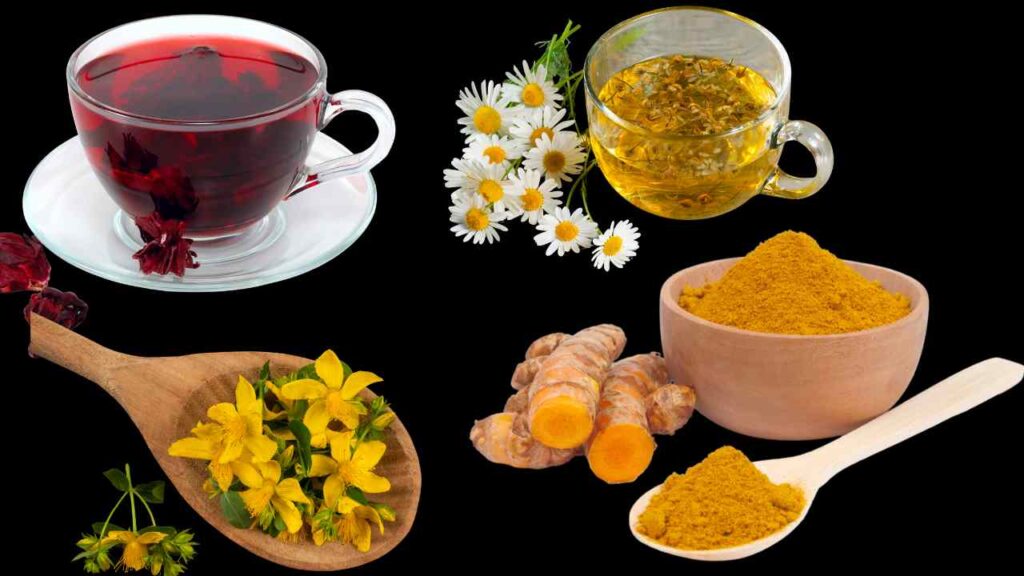
3️⃣ St. John’s Wort Tea (Hypericum perforatum)
Widely used to support sleep, anxiety, and mild depression, which are common during menopause.
✔ Improves sleep quality
✔ Helps reduce hot flashes
✔ Supports emotional balance
How to prepare:
- 350–400 ml (12–14 oz) of boiling water
- 1 to 1½ tablespoons of dried herb
- Steep for 20 minutes
- Strain and drink at night
⚠️ Important:
Do not take at the same time as antidepressants (such as sertraline) without professional guidance, as it may intensify effects.
4️⃣ Black Cohosh (Cimicifuga racemosa)
A classic herb in women’s herbal medicine.
✔ Helps reduce night sweats
✔ Improves mood stability
✔ Supports emotional well-being
How to prepare:
- 500 ml (17 oz) of boiling water
- 1 tablespoon of dried root
- Steep for 20 minutes
- Strain and divide into two doses (late afternoon and early evening)
⚠️ Also has a blood pressure–lowering effect, so avoid morning use.
5️⃣ Sage Tea (Salvia officinalis)
One of my personal favorites for menopause support.
✔ Reduces hot flashes
✔ Supports serotonin balance
✔ Improves overall hormonal comfort
How to prepare:
- 400–500 ml (14–17 oz) of boiling water
- 1 tablespoon of dried sage leaves
- Steep for 20 minutes
- Strain and drink (morning or afternoon)
🌿 A gentle, safe, and effective tea when used correctly.
⚠️ Important Safety Guidelines
✔ Do not use any herbal tea continuously for more than 14 days without professional guidance
✔ Stop use if you experience:
- Abdominal pain
- Nausea
- Dizziness
- Worsening gastritis or ulcers
🚫 Not recommended for pregnant or breastfeeding women, as these herbs may stimulate uterine activity
🚫 Avoid combining herbal teas with medications without professional supervision
🌿 Want to Learn How to Use Herbal Medicine the Right Way?
I’m Vanessa Gaudiano, a nutritionist and herbal medicine specialist.
I help women reduce inflammation, bloating, and chronic pain naturally, especially during menopause and in conditions such as:
- Arthritis and osteoarthritis
- Rheumatoid arthritis
- Osteoporosis
- Fibromyalgia
- Lipedema
- Endometriosis
💚 Before opening enrollment for FITONUTRI, I guide women through a De-Bloat & Anti-Inflammation Challenge, where I teach the first step of hormonal balance.
📌 New groups open approximately every 60 days.
👉 Check the link in the description or bio for upcoming opportunities.
If this content helped you, like, save, and share.
Let’s navigate menopause with knowledge, confidence, and natural solutions 🌿✨