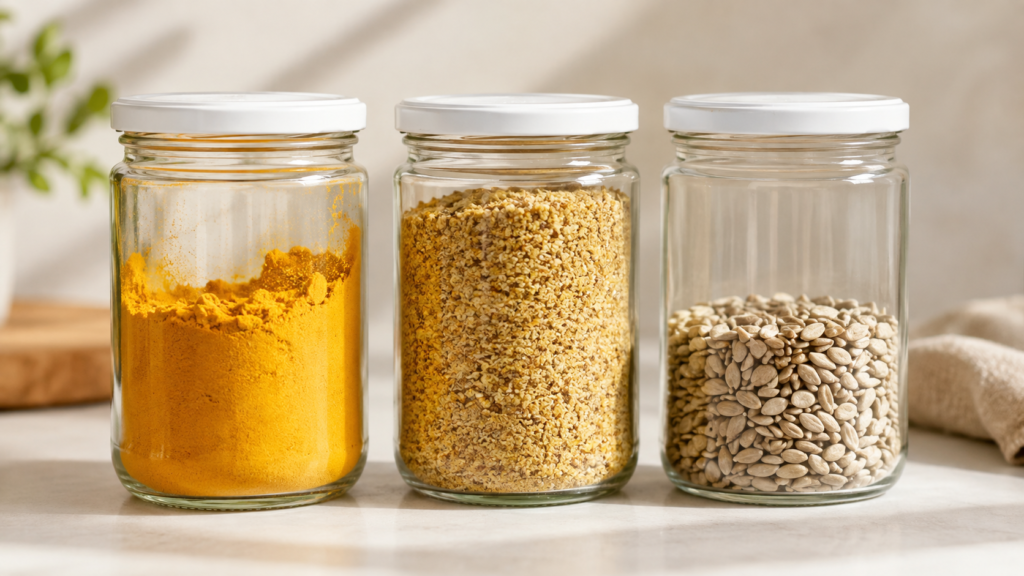
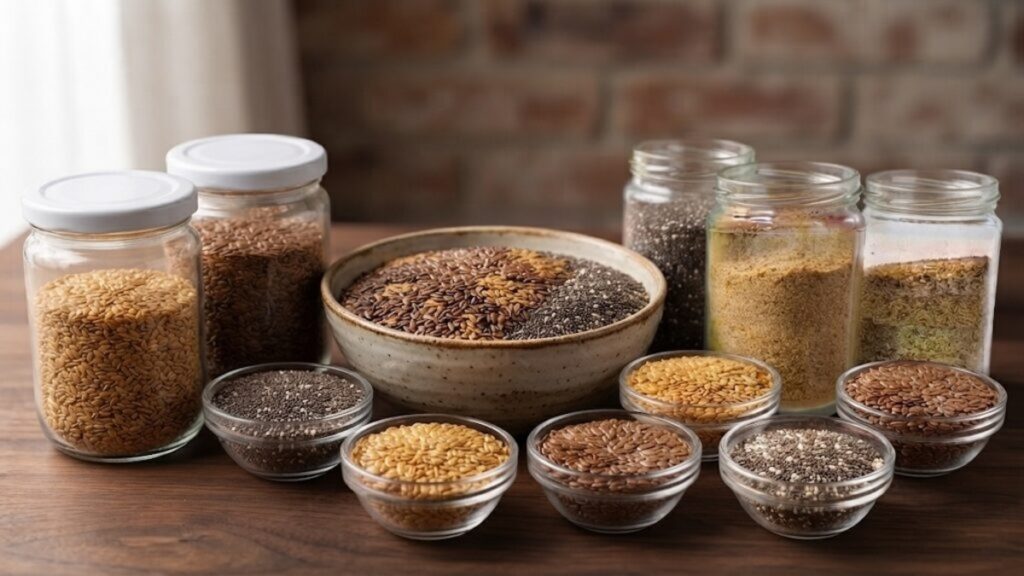
Menopause marks the end of a woman’s reproductive cycle, and with it come several hormonal changes that can affect both the body and mind. Fortunately, some natural foods may help ease these symptoms and support a smoother and healthier hormonal transition.
Among these foods, seeds stand out. Rich in nutrients, fiber, and bioactive compounds, they can easily be incorporated into your daily diet. Let’s take a look at 3 powerful seeds for women during menopause — and how to enjoy them in the best way!
🟡 1. Flaxseed – The Seed for Hormonal Balance
Flaxseed is one of the richest plant sources of lignans, compounds that act as phytoestrogens, meaning they can interact with estrogen receptors in the body. This may help support women experiencing common menopausal symptoms, such as hot flashes, irritability, vaginal dryness, and mood changes.
It is also rich in alpha-linolenic acid (ALA), a type of omega-3 fatty acid that supports a healthy inflammatory response and cardiovascular health — both important aspects of women’s health after the age of 50.
✅ How to consume:
- Prefer ground flaxseed, as whole seeds may pass through the digestive system without being fully digested.
- Use 1 tablespoon per day in yogurt, juices, soups, smoothies, or sprinkled over fruit.
- It can also be used in functional bread and cake recipes.
🔍 Did you know?
Some studies suggest that regular flaxseed consumption may influence menstrual patterns and hormone-related symptoms during the perimenopause transition.
🟠 2. Pumpkin Seeds – Supporting Hormones and Bone Health
Small in size but packed with nutrients! Pumpkin seeds are rich in zinc, iron, magnesium, and tryptophan, nutrients involved in normal body functions, including hormone production, emotional well-being, and sleep quality — all of which can become challenging during menopause.
In addition, magnesium and phosphorus contribute to maintaining healthy bones. This is particularly important after menopause, when declining estrogen levels can increase the risk of bone loss and osteoporosis.
✅ How to consume:
- Eat them raw or roasted as a snack.
- Add them to salads, bowls, granola, or blend them into sauces and doughs.
- Consume 1 to 2 tablespoons per day.
🔍 Bonus tip:
Roasting pumpkin seeds at home with herbs and a drizzle of olive oil creates a healthy and delicious snack for any time of day.
⚪ 3. Sesame Seeds – A Small Source of Calcium and Phytoestrogens
Sesame seeds are an excellent plant-based source of calcium, zinc, phosphorus, and phytoestrogens. They can help support bone health, cardiovascular health, and overall nutritional balance. They also contain antioxidants that help protect cells from oxidative stress.
Their healthy fats, including oleic acid, can be part of a balanced diet that supports healthy cholesterol levels and cardiovascular health — an important consideration during and after menopause.
✅ How to consume:
- Sprinkle them over salads, rice, vegetables, or use them in bread recipes.
- Tahini (sesame seed paste) is delicious in dressings or as a spread.
- Consume 1 to 2 tablespoons per day.
🔍 Did you know?
In Ayurvedic medicine, sesame is traditionally considered a warming food and has been used to support energy and nourishment during periods of transition, including menopause.
🌸 Extra Tips for Hormonal Balance:
- Get enough sleep: sleep quality plays an important role in hormonal health.
- Reduce stress: meditation, yoga, and walking can be great ways to promote relaxation and well-being.
- Avoid excessive alcohol and caffeine, as they may worsen symptoms such as hot flashes in some women.
- Try blackberry leaf or sage tea, which are traditionally used by some women as part of their menopause wellness routine.
✅ Conclusion
Menopause doesn’t have to be a difficult phase of life. By making mindful dietary choices, such as incorporating these three nutrient-rich seeds into your diet, you can support your overall health, energy, and well-being.
Nature provides a variety of simple, nutritious foods that can help support women’s health through every stage of life.