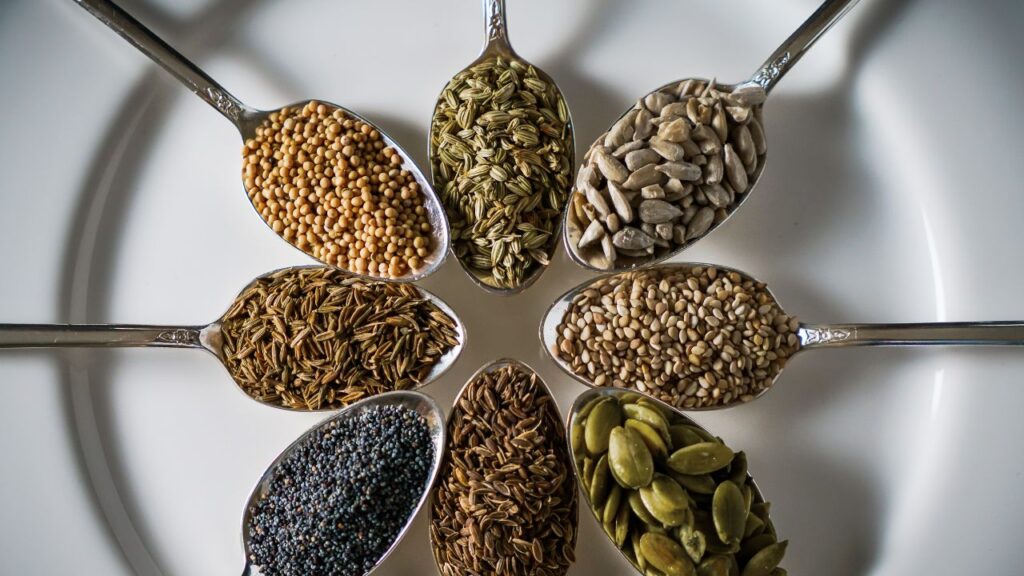
Have you ever bought pumpkin seeds and wondered:
“Do these really work? Can they truly improve my health? Will they help reduce inflammation, bloating, and build lean muscle?”
Let me be very clear with you: attaches yes. Pumpkin seeds are one of the most complete seeds available — and when used the right way, they can become a key part of a healthy lifestyle, especially for women over 40.
My name is Vanessa Gaudiano, I am a nutritionist and phytotherapist, and here I teach you how to use teas, juices, shakes, shots, and seeds to reduce inflammation, decrease bloating, and learn how to live without pain, particularly during hormonal transitions.
Today, the star of this article is pumpkin seeds.
What Are Pumpkin Seeds? (And How to Find Them Outside Brazil)
Pumpkin seeds are scientifically known as Cucurbita pepo.
If you live outside Brazil, simply look for pumpkin seeds or Cucurbita pepo in natural food stores.
They are small, but that is exactly where their power lies:
a tiny seed with an impressive concentration of nutrients.
Why Are Pumpkin Seeds So Powerful for Women Over 40?
After the age of 40, many women begin to experience:
- increased bloating
- silent inflammation
- more difficulty losing fat
- more difficulty building lean muscle
- poorer sleep quality
- increased anxiety or emotional instability
- lower energy levels (real fatigue, not laziness)
- digestive issues (constipation, gas, irregular bowel movements)
- concern about bones and joints, especially during menopause
Pumpkin seeds help because they are:
✔ rich in high-quality protein
✔ a source of essential and functional amino acids
✔ rich in minerals important for female health
✔ packed with bioactive compounds that support metabolic and hormonal balance
Now let’s get to the most impressive part.
Do Pumpkin Seeds Really Contain a Lot of Protein?
Yes — and this fact surprises many people:
➡️ About 30 grams of protein per 100 grams of pumpkin seeds.
That means nearly one-third of the seed is protein.
And this is not just any protein.
What Does “High Biological Value Protein” Mean?
High biological value protein means that pumpkin seeds contain a good amount of essential amino acids — the ones your body cannot produce on its own and must obtain through food.
Amino acids are the building blocks your body uses to create:
- lean muscle
- tissue repair
- strong bones
- digestive enzymes
- neurotransmitters like serotonin
- immune defense
- post-exercise recovery
This is not just about muscle — it’s about whole-body balance, especially during hormonal changes.
Key Amino Acids in Pumpkin Seeds and Their Benefits
1) Lysine: Muscle, Bones, and Calcium Absorption
Lysine is an essential amino acid involved in:
- muscle construction and repair
- tissue strengthening
- bone health
- improved calcium absorption
After 40, women often experience reduced nutrient absorption efficiency, making strategies like this extremely important.
2) Leucine: Protein Synthesis and Muscle Preservation
Leucine plays a critical role in:
- stimulating muscle protein synthesis
- preventing muscle loss
- improving post-workout recovery
- supporting resistance and strength training
It helps signal the body to preserve and build muscle, which becomes increasingly important with age.
3) Tryptophan: Mood, Sleep, and Emotional Balance
Tryptophan is a precursor to serotonin, the neurotransmitter responsible for:
- stable mood
- emotional well-being
- improved sleep quality
- reduced anxiety and irritability
Pumpkin seeds support emotional health when included as part of a balanced lifestyle.
4) Arginine: Circulation and Metabolic Support
Arginine helps produce nitric oxide, which supports:
- healthy blood circulation
- cardiovascular health
- blood pressure regulation
- physical performance
Better circulation means better nutrient delivery and metabolic efficiency.
5) Glutamine: Gut Health and Muscle Recovery
Glutamine supports:
- intestinal lining integrity
- gut recovery
- immune health
- post-exercise muscle repair
A healthy gut means better nutrient absorption and less inflammation overall.
How to Use Pumpkin Seeds for Maximum Benefits
Eating pumpkin seeds is not the same as using them strategically.
1) Roasting: Why It Matters
Roasting helps:
- improve flavor
- enhance digestibility
- reduce compounds that interfere with mineral absorption
- extend shelf life
Roast for 5–10 minutes, stirring constantly, and let cool before storing.
⚠️ Avoid salted pumpkin seeds.
2) Grinding: Unlocking Nutrients
Grinding:
- improves digestion
- enhances nutrient absorption
- releases bioactive compounds
- helps those with sensitive digestion
Use a blender or food processor in short pulses.
The goal is a coarse meal, not a paste.
How Much Should You Consume Per Day?
For most women:
➡️ 1 to 2 tablespoons per day
You can divide this amount throughout the day or consume it all at once, depending on your routine.
Easy Ways to Add Pumpkin Seeds to Your Diet
- In a morning smoothie
- Sprinkled over meals
- With fruit and cinnamon
- Mixed into yogurt or plant-based alternatives
Who Should Use Caution?
- People with phenylketonuria (PKU)
- Those with thyroid conditions (avoid consuming with medication)
- Individuals with sensitive digestive conditions (start with smaller amounts)
- Anyone under medical treatment should consult a professional
Pumpkin Seed Oil vs Whole Seeds
Whole seeds provide:
- protein
- fiber
- minerals
- phytonutrients
Pumpkin seed oil is more calorie-dense and lacks some of these benefits.
Storage Tips
- Store ground seeds in airtight glass containers
- Keep away from light and heat
- Use within 15–30 days
- Freeze larger quantities if needed
Final Thoughts: Do Pumpkin Seeds Really Work?
Yes — when used correctly.
The key is:
✔ consistency
✔ correct portion size
✔ proper preparation
If your goal is to reduce inflammation, decrease bloating, build lean muscle, and support hormonal balance after 40, pumpkin seeds are an excellent choice.
Now I Want to Hear From You
Do you already use pumpkin seeds?
- In smoothies?
- On meals?
- For muscle, digestion, or menopause?
Leave a comment and tell me which seed you want to learn about next: sesame, chia, flaxseed, or quinoa.
And if you want a structured method to use seeds, teas, and natural strategies to truly reduce inflammation and balance your body:
👉 FITONUTRI is the path.