Do you suffer from chronic pain and inflammation? Have you tried everything and are still looking for natural and effective solutions? Then this content is for you! As a nutritionist and herbal medicine specialist, I work with medicinal teas every day and have seen firsthand how they can support people’s well-being. Today, I want to introduce you to two amazing teas that you may already have at home: rosemary tea and mint tea.
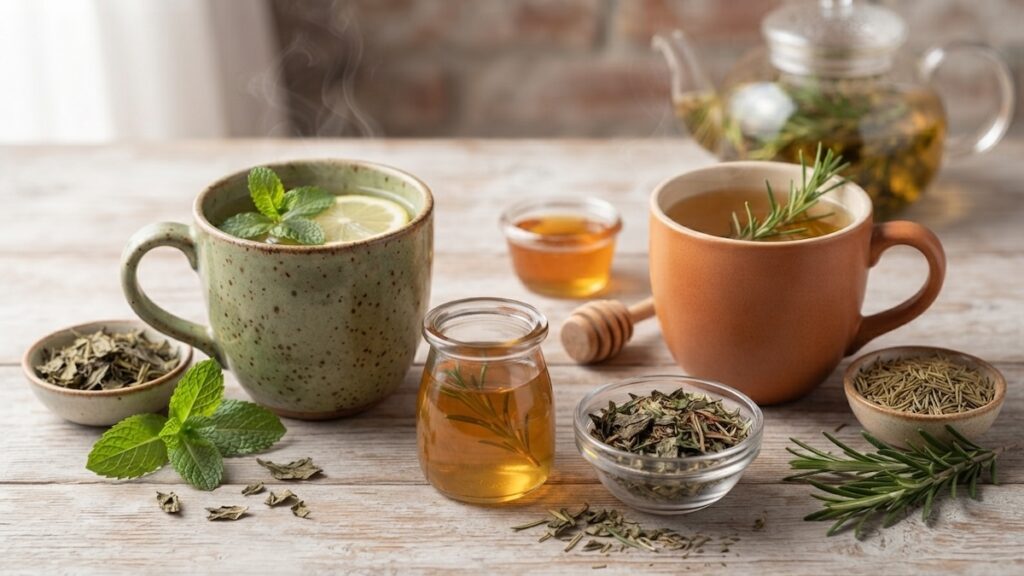
Dry rosemary sprigs and fresh mint leaves alongside a steaming cup of tea.
Managing chronic pain associated with autoimmune and rheumatic conditions such as rheumatoid arthritis, osteoarthritis, lupus, and fibromyalgia requires a multifaceted approach. In addition to conventional medical care, clinical herbal medicine may play a complementary role.
Medicinal infusions prepared with plants rich in volatile phenolic compounds, such as rosemary (Rosmarinus officinalis) and mint (Mentha spp.), contain bioactive compounds that may support healthy inflammatory pathways and help relieve muscle tension, potentially contributing to improved quality of life and mobility.
The Therapeutic Potential of Rosemary Tea (Rosmarinus officinalis)
Rosemary is more than an aromatic herb. It is also a medicinal plant containing a variety of bioactive compounds, including rosmarinic acid, cineole, and borneol, as well as flavonoids.
- Anti-Inflammatory and Pain-Relieving Properties: Rosemary contains compounds that may influence inflammatory mediators and may help support the management of joint discomfort associated with conditions such as lupus and fibromyalgia.
- Circulatory and Cognitive Support: It may support blood circulation and help with feelings of mental fatigue and concentration.
- Digestive and Antimicrobial Properties: Rosemary may support digestion and contains compounds with antimicrobial activity.
How to Prepare and Consume:
- Boil 400 ml of filtered water.
- Add 1 tablespoon of dried rosemary leaves.
- Cover the container and steep for 15 to 20 minutes.
- Strain and drink warm, without adding sugar.
The Neuromuscular Support of Mint Tea (Mentha spp.)
Mint is known for its antispasmodic and carminative properties, which are largely associated with its essential oil, particularly menthol.
- Muscle Relaxation: Menthol may have a relaxing effect on smooth muscle and can help ease feelings of muscle tension and discomfort.
- Digestive Support: Mint may help relieve indigestion, reduce gastrointestinal spasms, and help with nausea.
- Antioxidant Protection: Mint contains antioxidant compounds that help protect cells from oxidative stress, which may contribute to chronic inflammatory processes.
How to Prepare and Consume:
- Boil 250 ml of filtered water and immediately remove it from the heat.
- Add 1 teaspoon of dried or fresh mint leaves.
- Cover and steep for 10 to 15 minutes.
- Strain and preferably consume after main meals, such as lunch, without added sugar.
The Herbal Rotation Strategy
To promote responsible and safe use of medicinal plants, consider a herbal rotation approach. Consume one of the infusions continuously for up to 3 consecutive weeks, followed by 1 week of complete rest before introducing another plant. This approach is intended to provide a break between herbal preparations and avoid excessive or prolonged use.
Embedded content from YouTube
Disclaimer
The information contained in this article is for informational and educational purposes only. The consumption of medicinal teas and herbal plants does not replace diagnosis, medical treatment, or professional medical follow-up. Rosemary tea should be avoided during pregnancy due to its potential effects on uterine activity. People with epilepsy should also avoid medicinal doses of rosemary, and individuals with hypertension should use it only with appropriate professional guidance. Mint tea may aggravate symptoms in some people with gastroesophageal reflux, chronic heartburn, or active gastric ulcers.
References
- AL-SEREITI, M. R. et al. Pharmacology of rosemary (Rosmarinus officinalis Linn.) and its therapeutic potentials. Indian Journal of Experimental Biology, 1999.
- MCKAY, D. L. et al. A review of the bioactivity and potential health benefits of peppermint tea (Mentha piperita L.). Phytotherapy Research, 2006.
Vanessa Gaudiano — Nutritionist (CRN-8 16541) and Clinical Herbal Medicine Specialist, specializing in Women’s Health and Functional Nutrition.