Have you ever wondered what Coenzyme Q10 really is?
Is it true that it helps with weight loss?
Does it really increase energy?
Is it good for the heart?
Today you’ll clearly understand what this powerful compound is, how it works in your body, and how to use it strategically — including natural food sources.
What Is Coenzyme Q10?
First, an important clarification:
It is not an enzyme.
Coenzyme Q10 (also known as ubiquinone) is a fat-soluble bioactive compound naturally produced by your body.
While enzymes speed up chemical reactions, coenzymes assist enzymes in functioning properly.
In simple terms:
- Enzymes accelerate reactions.
- Coenzymes help enzymes work better.
- The result: more efficient metabolic processes.
And the main process involved?
Energy production.
Where Does CoQ10 Work in the Body?
CoQ10 plays a central role in the mitochondria — the “power plants” of your cells.
Inside the mitochondria, ATP (adenosine triphosphate) is produced. ATP is your body’s energy currency.
Without adequate ATP production, you may experience:
- Persistent fatigue
- Low energy
- Poor workout performance
- Slow recovery
- Reduced motivation
When ATP production improves, your energy improves.
And CoQ10 is a key player in that process.
Which Organs Produce More CoQ10?
Certain tissues require more energy and therefore produce higher amounts of CoQ10:
- ❤️ Heart
- 🧠 Brain
- 🩺 Liver
- 🩻 Kidneys
The heart, especially, depends heavily on this compound since it works continuously without rest.
Main Benefits of Coenzyme Q10
1. Increased Energy and Stamina
Because it enhances ATP production, CoQ10 may support:
- Better exercise performance
- Reduced fatigue
- Improved muscle recovery
That’s why it’s often included in lean muscle-building protocols.
2. Cardiovascular Health
CoQ10:
- Supports vasodilation
- Improves heart function
- May reduce risk of heart failure
- Acts as a powerful antioxidant
It is widely considered heart-friendly.
3. Antioxidant & Anti-Aging Support
CoQ10 helps combat oxidative stress by neutralizing free radicals, which may:
- Reduce premature aging
- Improve skin vitality
- Protect cellular structures
This is not about looking younger than your age — it’s about aging well.
4. Fatigue in Chronic Conditions
Conditions such as:
- Rheumatoid arthritis
- Fibromyalgia
- Chronic inflammatory disorders
Often involve mitochondrial dysfunction and severe fatigue.
CoQ10 supports mitochondrial function and may help reduce deep exhaustion commonly associated with these conditions.
5. Fertility & Hormonal Support
CoQ10 may:
- Improve egg quality
- Support cellular reproductive health
- Assist hormonal balance
Even in menopause, mitochondrial health influences metabolic and hormonal stability.
6. Neurological Protection
Research suggests CoQ10 may help:
- Protect neurons
- Reduce oxidative brain stress
- Support cognitive health
Does CoQ10 Help with Weight Loss?
It is not a direct fat-burning supplement.
However, it:
✔ Improves energy
✔ Enhances workout performance
✔ Supports lean muscle gain
✔ Optimizes cellular metabolism
More muscle mass increases basal metabolic rate, which indirectly supports healthy weight management.
How to Use Coenzyme Q10
Supplement Form
Common dosage:
- 100 mg to 200 mg daily
Important:
CoQ10 is fat-soluble, meaning it must be taken with healthy fats for proper absorption.
Examples:
- Olive oil
- Avocado
- Coconut
- Seeds
- Meals containing healthy fats
Many professionals recommend taking it with lunch.
Always consult a qualified nutrition professional before supplementation.
Who Should Be Cautious with Supplementation?
Avoid supplementing without supervision if you:
- Take anticoagulants
- Have kidney disorders
- Have liver disorders
- Use blood pressure medication
In these cases, dietary strategies may be safer.
Natural Food Sources of Coenzyme Q10
Yes — there are natural food sources that support CoQ10 levels.
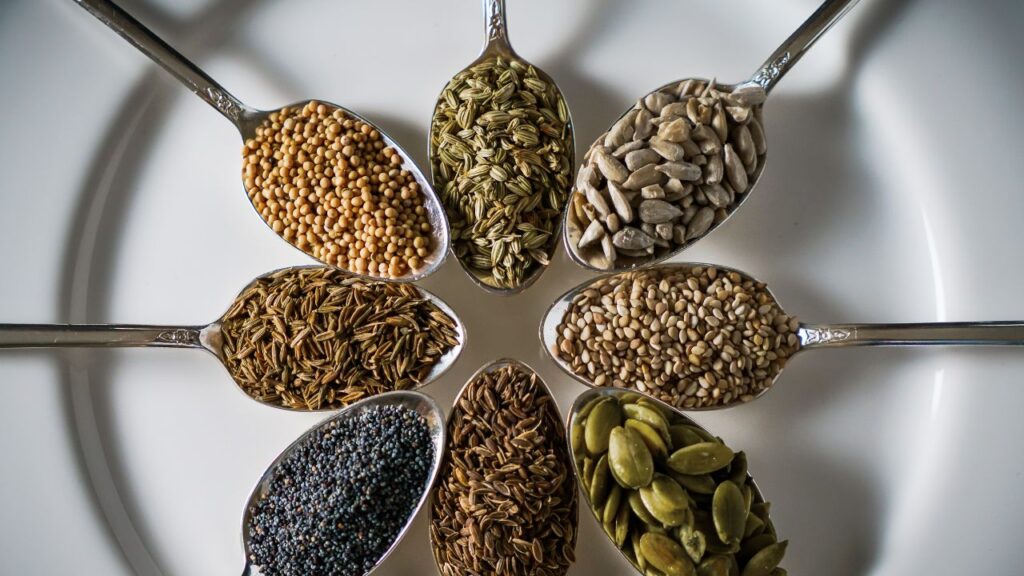
The most notable plant-based sources include:
Pistachios
One of the richest seed-based sources of CoQ10.
Also provides:
- Healthy fats
- Zinc
- Antioxidants
Sesame Seeds
Sesame seeds offer:
- Calcium
- Zinc
- Natural antioxidants
- Hormonal support benefits
Walnuts
Contain smaller amounts than pistachios but still contribute.
Why Are Seeds Rich in CoQ10?
Think about what a seed does.
It must:
- Germinate
- Grow
- Produce energy
A seed is essentially a plant embryo. It requires significant energy to initiate growth — which explains its concentration of bioactive compounds.
Do Seeds Support Lean Muscle Gain?
Yes.
Seeds provide:
- Plant-based proteins
- Healthy fats
- Antioxidants
- Zinc (important for brain and immune function)
When refined carbohydrates are reduced and protein plus healthy fats increase, the body tends to:
✔ Reduce fat mass
✔ Preserve lean mass
✔ Improve body composition
Consistency is key.
It’s not about eating a large handful once — it’s about daily moderate intake.
Smart Strategy
If supplementation is appropriate:
- Use a minimal effective dose
- Combine with nutrient-dense foods
If supplementation isn’t recommended:
- Focus on strategic dietary intake
- Include seeds daily
- Prioritize whole-food nutrition
Final Thoughts
Coenzyme Q10:
- Is not an enzyme — it is a coenzyme
- Is naturally produced by your body
- Supports cellular energy production
- Benefits heart health
- Acts as an antioxidant
- May assist lean muscle building
- Enhances vitality
And you can naturally support its levels with:
✔ Pistachios
✔ Sesame seeds
✔ Walnuts
✔ Healthy fats
If you’re seeking:
- More energy
- Reduced fatigue
- Better performance
- Healthy aging
- Improved body composition
It may be time to evaluate your metabolic strategy.
Remember: supplementation complements nutrition — it does not replace it.
Your body was designed to produce energy.
The question is: are you providing the right nutrients to support it?
If you’d like, I can now create:
- Full SEO in English
- Spanish version
- A version targeted specifically to women 40+
- A YouTube script version
- A high-conversion Pinterest headline
Just tell me which direction you want to go.